

You have created a series of hard-hitting social media campaigns with stunning graphics and an excellent strategy in place. Everything seems to be perfectly aligned but there is just one aspect remaining – how will you judge the efficacy of your social media campaign?
The best way to track social media success is by analysing your social media metrics. This allows you to see where the actual growth is and which areas require improvement. SMM performance tracking includes the process of gathering and analyzing data from social media platforms to evaluate how effectively a brand’s strategy meets business goals.
This includes –
- Raising brand awareness
- Increasing engagement
- Increasing website traffic
- Boosting sales
All these factors play a role in the success of your campaign. Let us take a look into some basic steps for measuring and analysing your social media performance and success.
- Identify Key Metrics
Key Metrics to Track by Objective
Brand Awareness: Measure Reach (unique users) and Impressions (total views) to determine how many people see your content.
Engagement Rate: Track likes, shares, comments, and saves relative to follower count to gauge content resonance, notes.
Website Traffic/Conversion: Focus on Post Link Clicks and Conversion Rate (purchases or sign-ups) to see how social leads to action.
Paid Campaign Efficiency: Monitor Cost Per Click (CPC) and Cost Per Conversion (CPA) to evaluate ROI.
Many social media platforms have built-in social media analytics tools. That includes Facebook Insights in Business Manager, Twitter Analytics, or Instagram Insights. These tools give you most of these insights for free. There are also free social media monitoring and measuring tools available.
Important Metrics Definitions
Click-Through Rate (CTR): Measures the percentage of people who clicked a link after seeing it.
Conversion Rate: Measures how often a click leads to a desired action (e.g., download, sale).
Share of Voice: Measures how your brand compares in mentions to competitors.
Top Social Media Metrics To Analyse and How To Measure Them Effectively
Reach
Reach is the total number of people who have seen your content, whether that be non-followers or followers. The higher the number is the more people have seen your content. This metric shows you how far your content is spreading and how relevant it’s becoming reaching people who may not know you yet but may have interest in your brand. The brand’s goal is to get those people to find you.
Reach rate can be calculated by total reach divided by total followers multiplied by 100.
Impressions
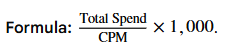
Impressions in social media represent the total number of times content is displayed on a screen, regardless of whether it is clicked or not. They are calculated automatically by platform analytics (Facebook Insights, Twitter Analytics) or by summing individual ad views. For paid campaigns, impressions are calculated as: Total Spend over cost per thousand impressions.
Follower Growth
It is not about the number of followers but the quality of followers. It is useless if you have 100 followers but only 10 of them engage with you. It is not about increasing the number but about having followers that feel like they’re a part of your community and engage with you.
Aim to gain followers who are generally interested in your content. Don’t try to make giant leaps with techniques that don’t bring any value, like buying followers or follow backs. If you want to compare your follower count with the number of followers your competitor has, do not measure the total number of followers accumulated. Instead, assess the growth your brand has had in terms of new followers in the past few months. That is how you can effectively assess your strategy’s growth.
Engagement
Engagement in social media metrics quantifies how actively your audience interacts with your content, including likes, shares, comments, saves, and clicks. It measures resonance, showing if content adds value, and is calculated by dividing total engagements by followers or reach, multiplied by 100.
How to Calculate Engagement Rate (ER)
The most common formula uses total engagements divided by total followers (or reach) to give a percentage.

CTR
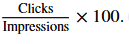
Click-Through Rate (CTR) in social media measures the percentage of people who click on a link, ad, or post after seeing it, indicating how compelling the content is. It is calculated by dividing total clicks by total impressions (views) and multiplying by 100, generally calculated as:
- Setting Goals
Another important step to measure social media campaign success is to set goals. Set SMART goals. These are Specific, Measurable, Attainable, Relevant, and Time-Bound.
Specific – Clearly define what needs to be accomplished, who is involved, and what steps are necessary.
Measurable – Keep metrics to track progress and know when the goal is achieved.
Attainable – Make sure the goal is realistic based on skills, resources, and time.
Relevant – Align the goal with broader, long-term objectives.
Time-Bound – Establish a clear deadline for completion.
These goals will help you create a framework from where you can assess your social media campaigns.
- Benchmarking
This means comparing your social media account to similar, competitor, and aspirational accounts. It includes asking yourself questions such as what social media channels are they on, how long have they had each account, how many followers/subscribers do they have, and how much engagement their last 15 posts have had. Make sure you’re making like-for-like comparisons by choosing relevant peer accounts for benchmarking.
Facebook’s Business Manager lets you see other people’s pages on their ‘Pages To Watch’ tab so that you can compare your page’s performance with similar ones.
After you watch and compare with the pages that you aspire to be like, you must define what success looks like to you. Create tangible goals based on what your competitor’s pages have achieved and set these as success metrics.
Ultimately, a successful social media campaign is not defined by how polished it looks, but by how well it performs against clear, measurable objectives. By identifying the right metrics, setting SMART goals, and benchmarking against relevant competitors, you move from guesswork to informed decision-making.
Social media analytics gives you the clarity to understand what truly resonates with your audience, what drives meaningful engagement, and what contributes to tangible business outcomes. It allows you to refine your strategy continuously-doubling down on what works and reworking what doesn’t.
In a landscape where trends evolve rapidly and attention spans are short, consistent measurement and analysis are what keep your brand relevant and effective. Because in the end, the most impactful campaigns aren’t just creative-they’re data-driven, adaptable, and built for sustained growth.
We at White Warbler Communications have extensive experience in handling social media marketing initiatives for brands. We want to help you with yours. With our expertise, you will meet all your desired social media metrics with ease. Reach out to us today!