
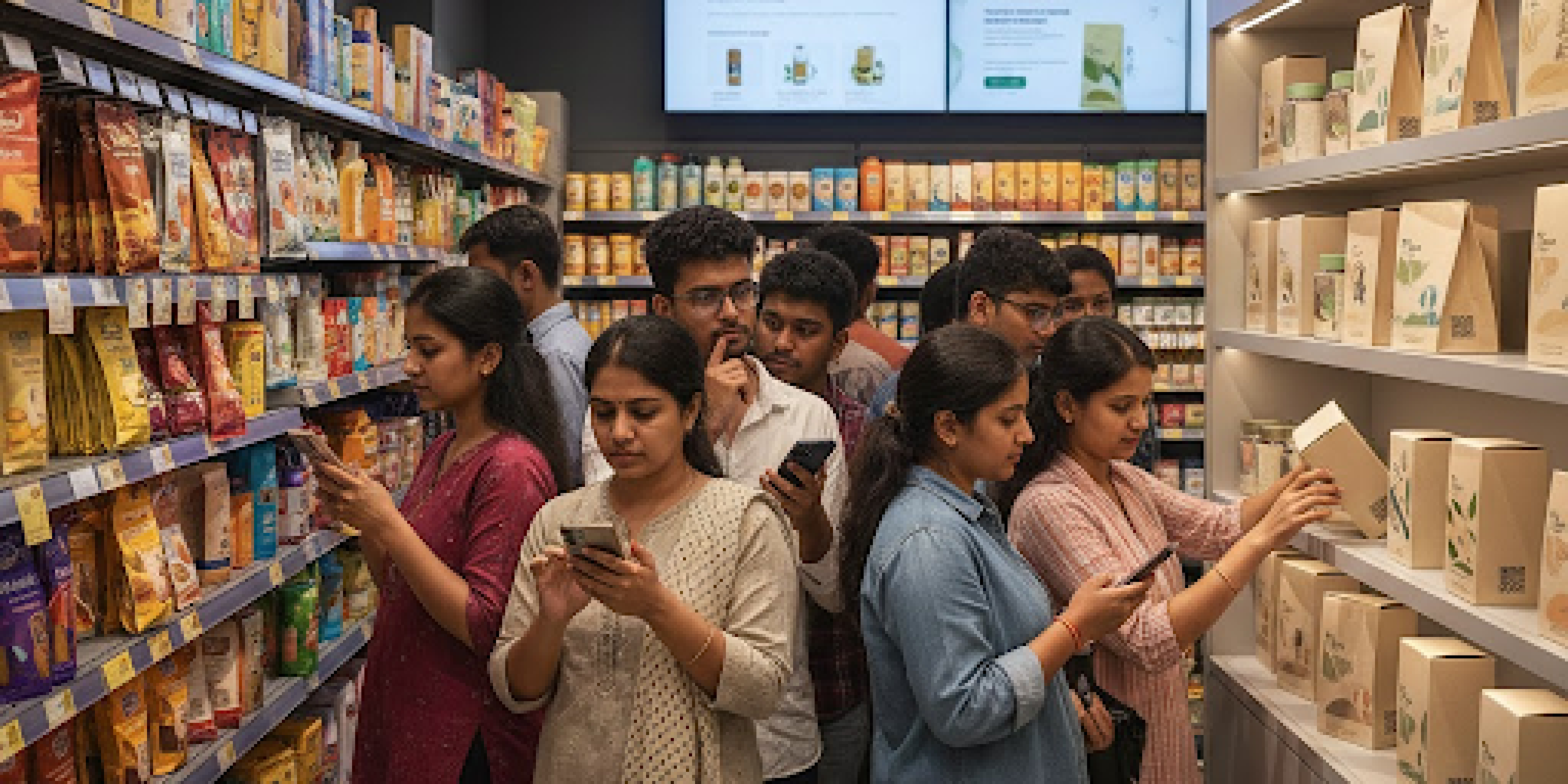
The FMCG market in India is changing steadily, not overnight. Products are still selling in large volumes, but the way people choose them has shifted. Consumers today are more aware, more selective, and more influenced by how a brand presents itself. This change has created new opportunities for design agencies that understand both the market and the consumer.
Earlier, FMCG growth depended mainly on distribution and pricing. If a product was available everywhere and priced well, it sold. Today, that is no longer enough. Shelves are crowded. Online platforms show hundreds of similar products. In this environment, brands need clarity, not noise. This is where design and communication play a real role.
Consumers are deciding faster
Indian consumers now make decisions quickly. In stores, they scan shelves and move on. Online, they scroll even faster. A product gets a few seconds of attention at best. If the packaging or branding does not communicate clearly, it gets ignored.
This has increased the importance of brand identity and packaging design. Design agencies are being asked to help brands simplify their message. It is no longer about adding more information. It is about showing the right information first.
Clear brand positioning, readable packaging, and consistent visual identity help consumers understand what a product is and why it matters. Agencies that can help brands achieve this clarity are seeing more demand.
Packaging is now part of marketing
Packaging used to be treated as a final step. Today, it is part of the marketing strategy. FMCG brands are realising that packaging influences trial, recall, and repeat purchase.
Good packaging design helps a product stand out on shelves and also perform better online. Ecommerce platforms and quick commerce apps have changed how packaging is viewed. A pack must look good in real life and also work as a small image on a phone screen.
Design agencies that understand this are helping brands rethink layout, colours, typography, and imagery. The goal is not decoration. The goal is visibility and understanding.
Digital marketing is shaping FMCG growth
Digital marketing services now play a major role in how FMCG brands grow. Even when people buy offline, their first interaction with a brand often happens online.
SEO services help products appear when people search for solutions. Social media marketing builds familiarity and keeps the brand present in everyday conversations. Content marketing helps explain product benefits, sourcing, and values in a simple way.
Design agencies that work closely with digital marketing teams have an advantage. When branding, packaging, and online marketing follow the same logic, the brand feels more trustworthy and consistent.
Websites matter more than before
FMCG brand websites were once ignored. Today, consumers visit them to check ingredients, certifications, and authenticity. A poorly designed website creates doubt, even if the product is good.
This has opened opportunities for agencies offering website design and ecommerce website design. Brands want clean layouts, easy navigation, and mobile friendly experiences. Responsive web design is no longer optional. Most users access sites on phones.
Landing page design is also important for campaigns and product launches. Simple pages that explain the product clearly perform better than flashy ones.
Sustainability is influencing choices
More consumers are paying attention to sustainability. They notice packaging material, waste, and environmental impact. This does not mean every consumer expects perfect solutions, but they do expect honesty.
Design agencies are helping brands communicate sustainability clearly without exaggeration. This includes packaging design, label information, and digital content. The focus is on being transparent and practical.
Brands that handle this well build long term trust. Agencies that understand consumer behaviour around sustainability are becoming valuable partners.
Regional brands are growing
India is seeing strong growth in regional FMCG brands. These brands often have loyal local customers but struggle to present themselves consistently at a larger scale.
Design agencies can help here through brand strategy, visual identity development, packaging systems, and online marketing support. The aim is to keep the brand’s local character while making it easier to understand for a wider audience.
This work requires sensitivity and real market understanding, not copy paste design.
Data is influencing design decisions
FMCG brands are increasingly using data to guide decisions. They want to know what works and why. Design agencies are expected to support this thinking.
Market analysis, competitor reviews, and digital performance data are now part of branding and packaging discussions. Design is no longer judged only by how it looks, but by how it performs.
Agencies that combine creative thinking with basic data understanding are finding more opportunities.
Where design agencies fit today
The FMCG market in India offers strong opportunities for design agencies that think beyond execution. Brands are looking for partners who understand consumer behaviour, market conditions, and communication.
Branding, packaging, digital marketing, and online presence are all connected. Agencies that work across these areas can help brands grow in a more consistent way.
White Warbler Communications has seen this shift closely while working with FMCG brands across branding, packaging, digital marketing, and website design. The most successful projects are those where design decisions are grounded in real consumer behaviour rather than trends.
FMCG brands in India do not need louder design. They need clearer design. They need communication that helps consumers decide faster and feel confident.
For design agencies, the opportunity lies in helping brands simplify, clarify, and stay consistent. Agencies that focus on this will continue to stay relevant as the FMCG market evolves.